

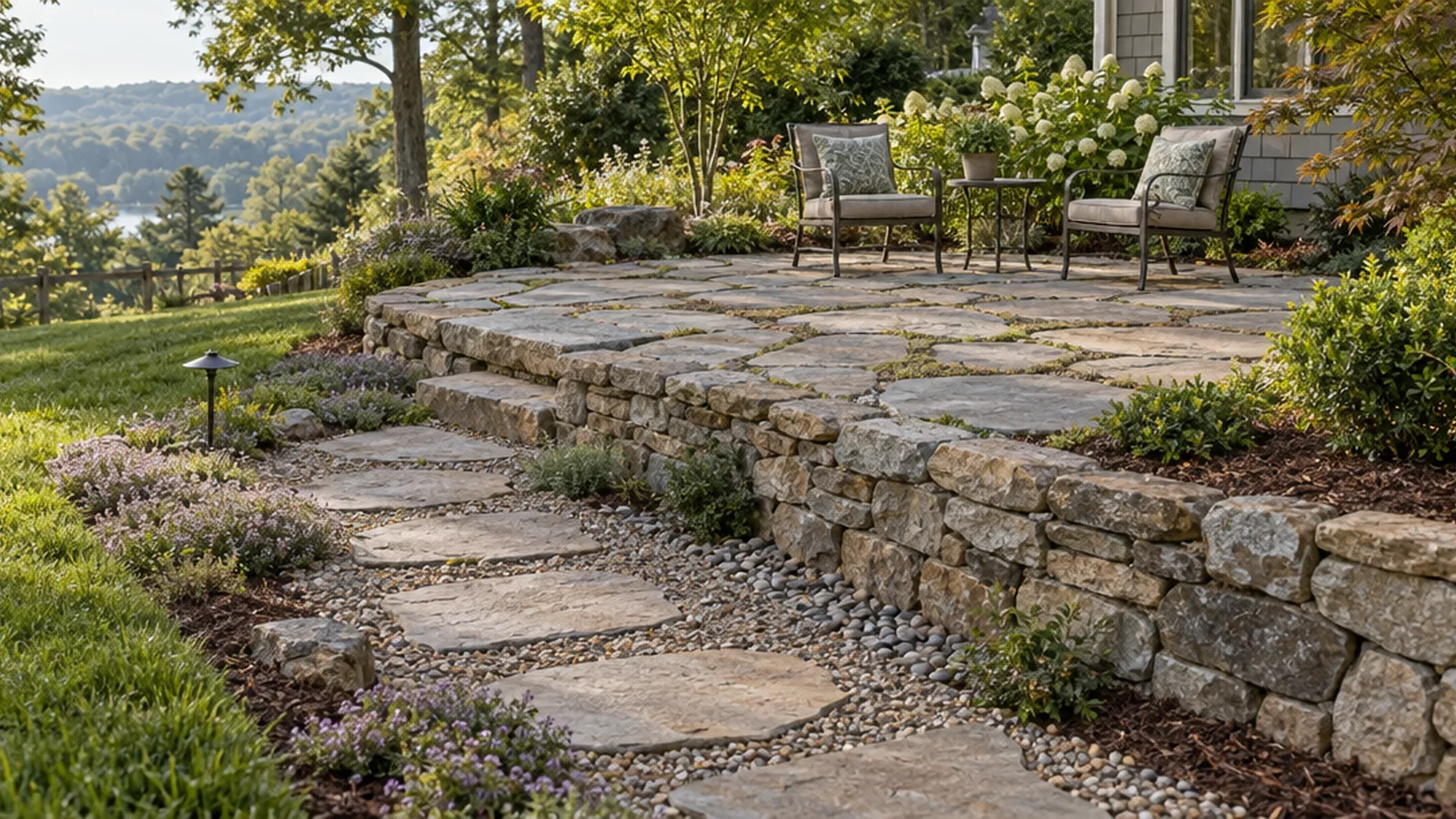
A patio is the floor of your outdoor living space, and it decides a lot about how the rest of the yard works. This section covers ground-level hardscape for houses, townhomes and rentals: layouts and styles, the main surface materials, paths and steps, and the slopes, walls and drainage that keep everything sound. Costs and install how-tos sit alongside the ideas, because a layout you can’t afford or build isn’t much help.
Choosing a patio surface
Most patio decisions start with the material, and each one trades cost, labor, look and climate tolerance differently.
Paver Patios
Concrete and stone pavers are flexible, repairable and well suited to DIY if the base is done right. This sub-topic covers paver types, base depth, layouts for small backyards, budget options, cost by size, and methods such as laying pavers on uneven ground, over existing concrete or with gravel joints.
Concrete Patios
A poured slab is often the most affordable hard surface per square foot, and finishes have come a long way. Here you’ll find stamped and broom finishes, painting and staining, DIY pours, budget approaches and cost by size, along with comparisons against pavers.
Flagstone Patios
Flagstone brings a natural, irregular look and holds up well when it sits on a proper base. This area covers types and colors of flagstone, dry-laid versus mortared installation, base preparation and costs.
Gravel Patios
Gravel is the cheapest and fastest way to make a usable outdoor floor, and it drains well. Topics include choosing the right gravel, pea gravel patios, edging that keeps stone in place and realistic costs.
Paths, layouts and finishing touches
Garden Paths
Walkways and steps connect the patio to the rest of the yard and the front door. This covers front walkways, paver and flagstone paths, pea gravel and budget paths, cottage-style paths, flagstone steps, paths on slopes and walkway lighting.
Small Patio Ideas
Townhouse, apartment and compact backyard patios need every square foot to pull its weight. Expect furniture layouts, lighting, modern small-space styles and fire features that fit within lease terms and local rules.
Patio Decor
The right furniture arrangement makes a patio feel comfortable rather than crowded. This area covers layout dimensions, outdoor dining areas, furniture choices and covers that protect them between seasons.
Winter Patios
A patio doesn’t have to sit empty from November to March. Topics include electric, propane and pellet patio heaters, the clearances they need, and materials that cope with cold-climate freeze and thaw.
Slopes, walls and water
Retaining Walls
Low retaining walls can turn an awkward slope into level, usable ground. This sub-topic covers block, stone, brick, wood and poured concrete walls, costs by height and type, drainage behind the wall, and when a slope can stay unwalled.
Sloped Yards
Water is the quiet reason many patios fail. Here you’ll find types of yard drains, drainage pipe and channel drains, leveling a sloped yard, and ways to move water away from the house.
Before you break ground
Call 811 a few days before you dig so buried utility lines can be marked. Plan a gentle fall away from the house so rain doesn’t run toward the foundation. Check permits, HOA rules and, if you rent, your landlord’s permission before changing the ground. Taller retaining walls and walls holding back driveways or structures can need engineering and a permit, so confirm local limits first.
Where related topics live
Raised wood and composite platforms belong in Decks, and anything overhead belongs in Patio Covers. Planting around a patio is covered in Landscaping, and boundaries and privacy screens are covered in Fences.